What exactly is the Nebosh General Certificate anyway
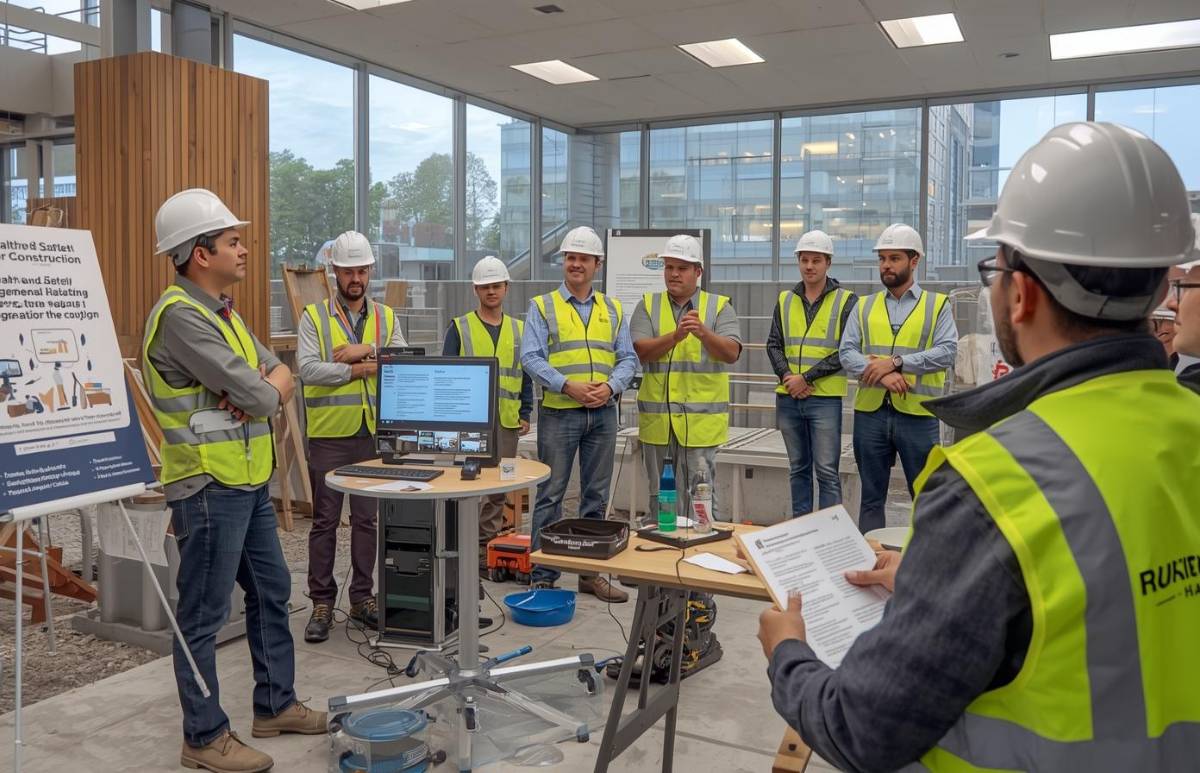
If you have spent any time working in a supervisory or management role in the UK, you have likely heard colleagues or recruiters mentioning the Nebosh General Certificate. It is often spoken about with a sense of reverence, as if it is a rite of passage for anyone serious about workplace welfare. In simple terms, it is the most widely recognised health and safety qualification in the UK, and for good reason. It provides a foundational understanding of how to manage risks, identify hazards, and ensure that an organisation stays on the right side of the law.
The National Examination Board in Occupational Safety and Health (NEBOSH) is an awarding body that has been setting the standard since 1979. Their general certificate is designed not just for health and safety professionals, but for anyone who has responsibility for other people at work. Whether you are a team leader in a warehouse, a site manager on a construction project, or an office manager in a high-rise building, the principles taught in this course apply to your daily life. It is about moving away from a ‘tick-box’ exercise and towards a culture where safety is prioritised because it makes business sense and protects lives.

Why this qualification is a game changer for your career
Many people find themselves at a crossroads in their career where they want to step up into more senior management roles but feel they are missing a specific credential that proves they can handle responsibility. This is where the Nebosh General Certificate comes into play. It is often the first thing recruiters look for on a CV when hiring for roles that involve any level of risk management. Holding this certificate signals to an employer that you understand the moral, legal, and financial implications of health and safety.
From a financial perspective, the benefits are clear. Statistics often show that individuals with this qualification can command higher salaries than those without it. Furthermore, it opens doors to professional memberships, such as becoming an Associate Member of IOSH (AIOSH) or a Technical Member (TechIOSH), depending on your experience. These post-nominal letters after your name provide instant credibility in a competitive job market. But beyond the money and the titles, there is a personal confidence that comes with knowing you have the tools to keep your team safe.
Breaking down the course content and what you will learn
The modern version of the course is split into two main units, known as NG1 and NG2. This structure was designed to make the learning process more streamlined and relevant to the modern workplace. It focuses on what you actually need to do on a Monday morning, rather than just memorising dry legislation from a textbook.
Managing health and safety (NG1)
The first part of the course deals with the ‘why’ and the ‘how’ of safety management. You will dive into the legal framework of the UK, looking at the Health and Safety at Work etc. Act 1974 and the Management of Health and Safety at Work Regulations 1999. However, it is not just about the law. You will also study:
- How to foster a positive health and safety culture within a diverse workforce.
- The various health and safety management systems, such as ISO 45001.
- How to carry out effective incident investigations to prevent recurrences.
- The financial impact of accidents, including insured and uninsured costs.
Practical risk assessment (NG2)
The second unit is much more hands-on. It covers a vast range of workplace hazards and how to control them. This is where the theory meets the reality of the shop floor or the office. The topics covered in this section are extensive and include:
- Physical and psychological health, including stress and musculoskeletal disorders.
- Chemical and biological agents and how to control exposure.
- General workplace issues like fire safety, electricity, and work equipment.
- High-risk activities such as working at height and manual handling.
How the open book examination changed the way we study
In recent years, the way students are assessed for their Nebosh General Certificate has undergone a significant transformation. Gone are the days of sitting in a cold exam hall for three hours, frantically trying to remember every tiny detail of a regulation. The introduction of the Open Book Examination (OBE) for the NG1 unit has shifted the focus from memorisation to application.
In an OBE, you are given a realistic workplace scenario and a series of tasks to complete over a 24-hour period. You have access to your notes and the internet, but the questions are designed so that you cannot simply copy and paste an answer. You have to prove that you can apply the principles of the course to the specific situation described. This is a much better reflection of how a health and safety professional actually works. In the real world, if you aren’t sure about a specific legal limit, you look it up; the skill lies in knowing how to implement that information to keep people safe.
The NG2 unit remains a practical risk assessment. You are required to go into a real workplace (usually your own) and perform a comprehensive risk assessment, identifying hazards and recommending prioritised actions. This practical application ensures that by the time you receive your certificate, you have already demonstrated that you can do the job in a real-world environment.

Who should actually think about taking the course
While many people assume this course is only for those who want to be ‘Health and Safety Officers’, that is a common misconception. In reality, the course is perfectly suited for a wide range of professionals across various industries. If your job involves making decisions that affect the environment people work in, this course is relevant to you.
Managers and supervisors are the primary audience, as they are the ones responsible for implementing safety policies on the ground. However, HR professionals often take the course to better understand their role in employee wellbeing and legal compliance. Even business owners of smaller companies find the course invaluable, as it gives them the knowledge to manage their own safety requirements without always having to rely on expensive external consultants. It is about taking ownership of the safety standards in your own centre of operations.
Practical tips to help you pass the first time
Taking on a qualification like this while working full-time can feel daunting, but it is entirely manageable with the right approach. The key is to stay organised and not let the volume of information overwhelm you. Many students find that breaking the syllabus down into smaller, bite-sized chunks makes the learning process much more enjoyable.
- Start by familiarising yourself with the command words used by NEBOSH, such as ‘identify’, ‘describe’, and ‘explain’. Understanding what the examiner is asking for is half the battle.
- Use your own workplace as a living laboratory. As you learn about different hazards, look around your own office or site and see how those hazards are currently being managed.
- Engage with your training provider. Whether you are studying in a classroom or via distance learning, ask questions and participate in discussions. Hearing how other people handle safety challenges can provide excellent context.
- Practice the mock exams. The more you get used to the format of the open book exam and the practical assessment, the more relaxed you will feel when the real thing comes around.
The journey towards gaining your certificate is not just about passing an exam; it is about changing your mindset. You will start to see the world through a ‘safety lens’, noticing things you might have previously walked past. This heightened awareness is what ultimately leads to fewer accidents and a more productive, happy workforce. Choosing to invest the time in this qualification is a signal that you value your career and, more importantly, the people you work with every day.

Sophie Langford is a business and tech journalist covering disruptive technologies, major tech acquisitions, and the rise of next-generation entrepreneurs. She provides in-depth insights into how Silicon Valley’s biggest players are redefining industries.